Top 12 Cloud Cost Optimization Tools for Savvy Teams in 2025
Navigating the crowded market of cloud cost optimization tools can be overwhelming. As cloud bills escalate, engineering and FinOps teams are under increasing pressure to curb spending without sacrificing performance. The challenge lies in identifying which solution truly fits your specific infrastructure, workflow, and savings goals. A tool that excels at Kubernetes cost allocation might be overkill for a team primarily focused on shutting down non-production EC2 instances, while a platform built for enterprise-wide FinOps governance may not suit a startup's need for immediate, hands-on savings. This is where a clear, comparative guide becomes essential.
Contents
- 1. Server Scheduler
- 2. AWS Marketplace
- 3. Microsoft Azure Marketplace (plus Azure Cost Management)
- 4. Google Cloud Marketplace
- 5. IBM Apptio Cloudability
- 6. CloudZero
- 7. Kubecost
- 8. Spot by NetApp (Eco, Ocean, Elastigroup)
- 9. Flexera One – Cloud Cost Optimization (FinOps)
- 10. ProsperOps
- 11. Harness Cloud Cost Management (CCM)
- 12. G2 – Cloud Cost Management Category
- Comparison of Top Cloud Cost Optimization Tools
- Final Thoughts and Recommendations
- Related Articles
Ready to Slash Your AWS Costs?
Stop paying for idle resources. Server Scheduler automatically turns off your non-production servers when you're not using them.
This article cuts through the noise to provide a detailed breakdown of the top platforms designed to help you manage and reduce your cloud spend. Before diving into specific cloud tools, it's beneficial to understand overarching business objectives. Explore various proven cost reduction strategies for business to frame your technical approach within a larger financial context. You will find a curated analysis of leading cloud cost optimization tools, from major cloud provider marketplaces to specialized SaaS platforms, to help you find the right fit for your needs.
Server Scheduler
Server Scheduler stands out as a premier cloud cost optimization tool for its direct, no-code approach to a major source of wasted spend: idle resources. It provides a highly focused solution that empowers DevOps, FinOps, and engineering teams to automate the starting, stopping, and resizing of cloud infrastructure without writing a single line of code. Its core strength lies in its visual, point-and-click time-grid interface, which makes creating and managing complex schedules for AWS resources both intuitive and efficient. This simplicity is a powerful differentiator, removing the dependency on cron jobs, custom scripts, or intricate Infrastructure-as-Code configurations.
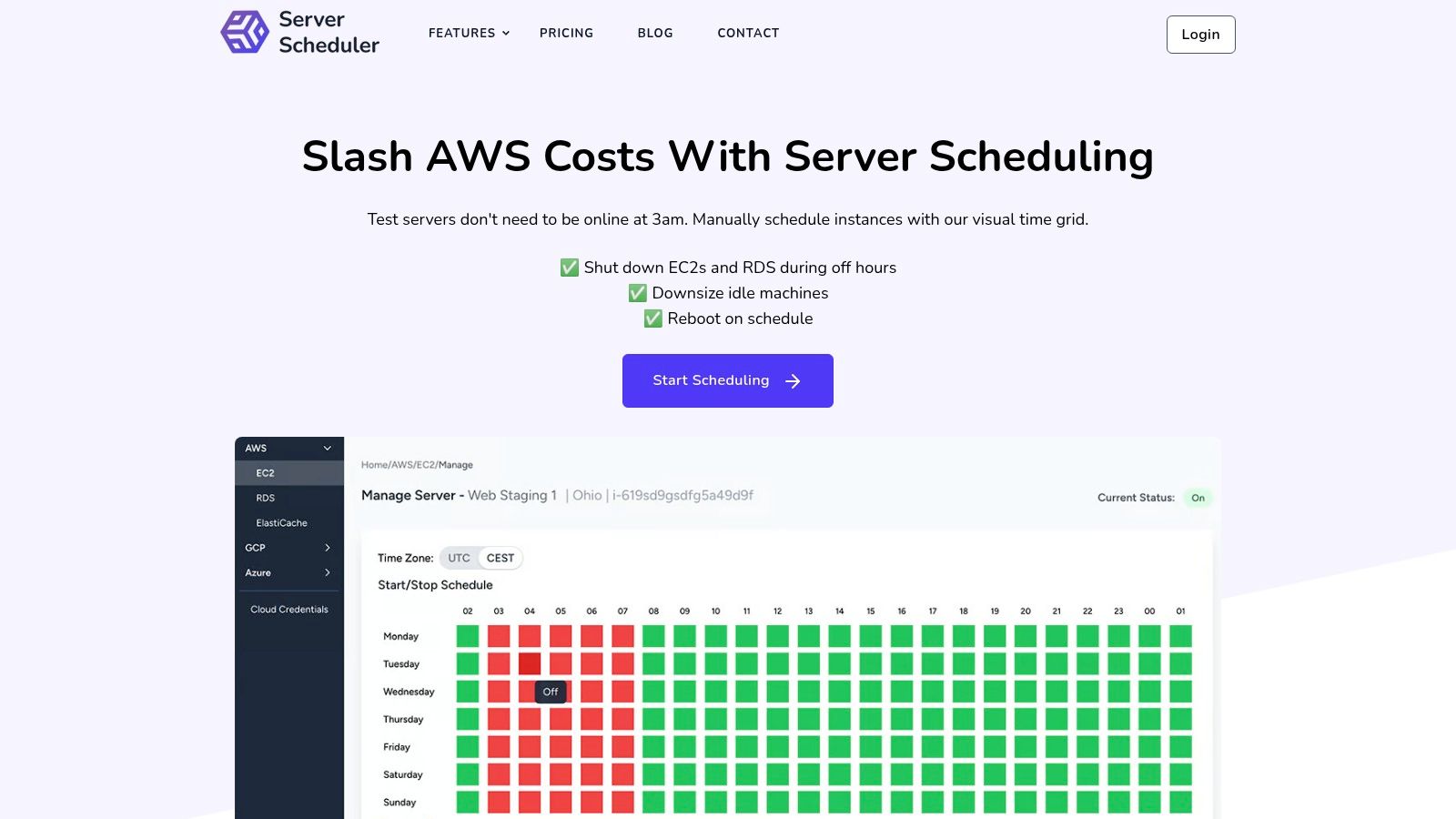
The platform is engineered for immediate impact, targeting non-production environments like development, staging, and QA that often run 24/7 despite only being needed during business hours. By automating shutdowns on nights and weekends, teams can achieve cost reductions of up to 70%. Tools like Server Scheduler are prime examples of how workflow automation can significantly reduce operational costs by managing resource uptime and downtime efficiently. It’s an ideal solution for teams that need reliable, predictable cost controls without adding operational complexity. You can find an in-depth guide to scheduling EC2 instances on their blog.
Key Insight: Server Scheduler is not a visibility tool; it's an action tool. It excels at executing a simple, high-impact savings strategy: turning off what isn't being used. This makes it an excellent complement to broader cost management platforms.
| Feature | Ideal For |
|---|---|
| Scheduled Stop/Start | Shutting down non-production environments overnight and on weekends. |
| Scheduled Resize | Scaling down resources during off-peak hours to lower compute costs. |
| Audit Logs | FinOps and security teams needing to track all automated resource state changes. |
AWS Marketplace
AWS Marketplace isn't a single tool but a digital catalog with thousands of third-party software listings, making it a crucial starting point for discovering and deploying cloud cost optimization tools. Its primary value is streamlining procurement. Instead of managing separate contracts and invoices, you can subscribe to FinOps platforms, monitoring solutions, and other cost-saving software directly through your AWS account. This consolidates billing and allows you to use your existing AWS Enterprise Discount Program (EDP) commitments for software purchases, which is a significant financial advantage.
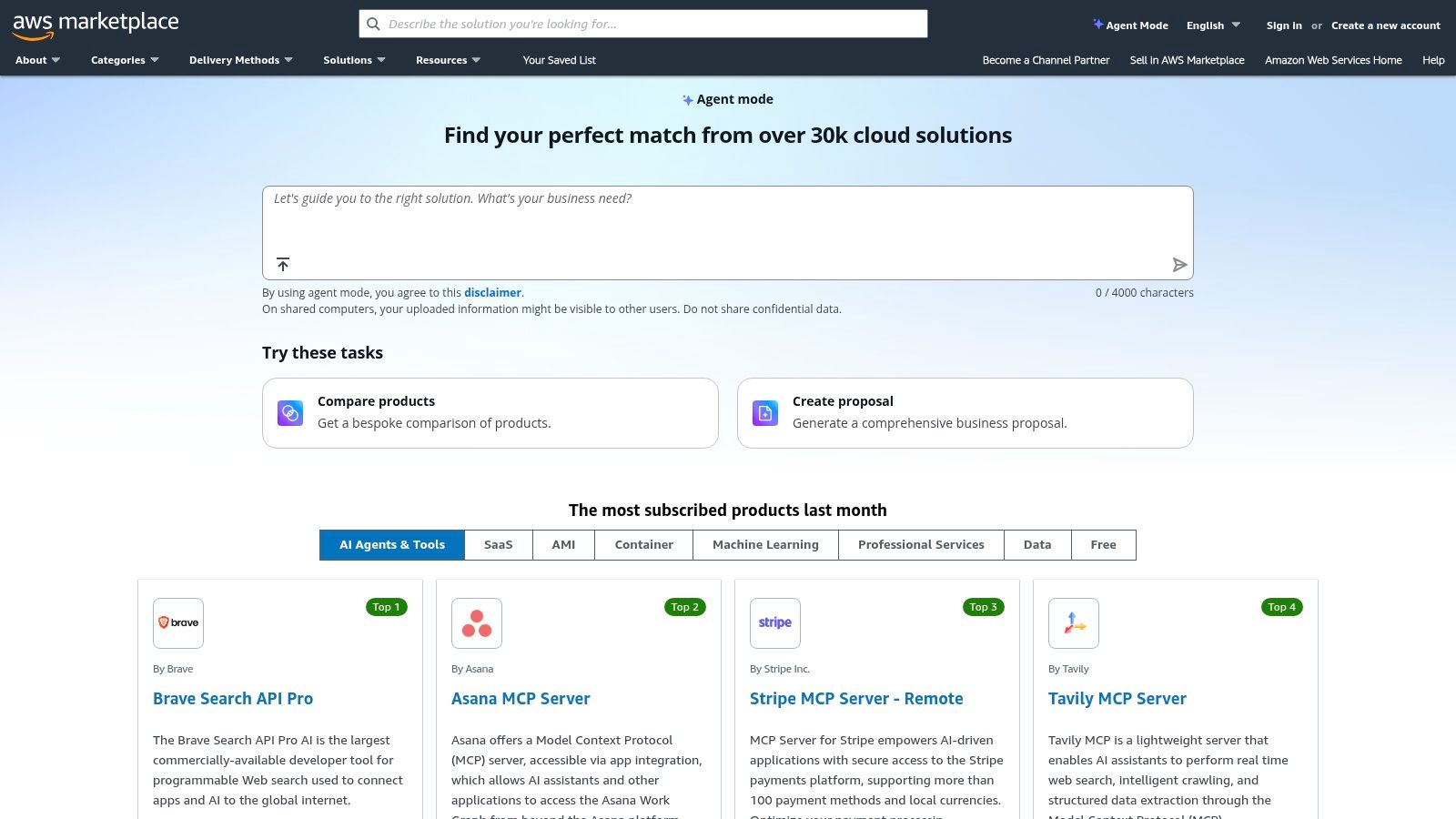
The platform features a dedicated "Cost optimization with AWS Marketplace" section that curates relevant tools, simplifying the search process. Many listings offer free trials or pay-as-you-go pricing, enabling quick, low-risk evaluations. For deeper insights into leveraging this platform, you can explore various AWS cost optimization strategies. Use AWS Marketplace to find and deploy a broad cost visibility platform, then add Server Scheduler for targeted, automated savings on non-production EC2 and RDS instances—a specific capability many larger platforms don't focus on.
Microsoft Azure Marketplace (plus Azure Cost Management)
Similar to its AWS counterpart, the Microsoft Azure Marketplace serves as a central hub for discovering, purchasing, and deploying third-party applications and services directly within the Azure ecosystem. A key differentiator is its tight integration with the native Azure Cost Management tool, which is included at no extra charge for most subscription types. This combination provides a powerful starting point for Azure users, offering both a catalog of advanced third-party cloud cost optimization tools and a foundational, built-in solution for visibility and budget control.
This dual approach allows organizations to begin their cost management journey with Azure's native tools for basic analysis and then seamlessly procure more sophisticated FinOps platforms from the marketplace as their needs evolve. All purchases are consolidated onto the Azure invoice, simplifying vendor management and procurement. You can find a wide range of solutions, from comprehensive cost management platforms to specialized consulting services for FinOps assessments, all available at azuremarketplace.microsoft.com.
Google Cloud Marketplace
Similar to its AWS counterpart, Google Cloud Marketplace is a centralized hub for discovering, purchasing, and deploying third-party software directly within the Google Cloud ecosystem. It simplifies procurement by allowing teams to subscribe to various cloud cost optimization tools and have the charges appear on their existing Google Cloud invoice. This integration is key, as it consolidates vendor management and streamlines the payment process, making it easier to track software spending alongside infrastructure costs. A standout feature is the platform's transparent billing and the ability to export all billing data to BigQuery for in-depth analysis. For more details on its offerings, you can visit the official Google Cloud Marketplace site.
IBM Apptio Cloudability
IBM Apptio Cloudability is an enterprise-grade FinOps platform designed for mature organizations seeking deep, multi-cloud financial management. It excels at translating complex cloud spend into clear business metrics, enabling teams to allocate costs accurately across departments, projects, and products. The platform provides comprehensive visibility, from high-level trends down to individual resource costs, including Kubernetes container spend. Its strength lies in its advanced analytics and automation, which help manage Reserved Instances and Savings Plans to maximize commitment-based discounts. As one of the more advanced cloud cost optimization tools, Cloudability is ideal for organizations implementing formal FinOps best practices.
CloudZero
CloudZero shifts the conversation from infrastructure totals to business outcomes by providing deep cost intelligence. Its platform excels at mapping cloud spend to specific business metrics like cost-per-customer, per-feature, or even per-AI-token, making it one of the most powerful cloud cost optimization tools for engineering-driven organizations. Instead of just showing you a high-level compute bill, CloudZero connects that spend to the engineering activities and product features that generated it. This granular visibility empowers teams to make informed decisions about architecture and feature development based on actual unit costs. You can learn more at their official site, www.cloudzero.com.
Kubecost
Kubecost is one of the most popular open-source cloud cost optimization tools specifically designed for Kubernetes environments. It provides real-time cost visibility and insights broken down by Kubernetes concepts like pod, namespace, deployment, and label. This granular view helps engineering teams understand the cost drivers within their clusters (EKS, GKE, AKS, or self-managed) and make informed decisions to reduce waste. It achieves accuracy by integrating directly with cloud billing data. The platform offers flexible deployment options, including a powerful free tier for single clusters. You can procure it through the AWS Marketplace for consolidated billing.
Spot by NetApp (Eco, Ocean, Elastigroup)
Spot by NetApp is a powerful suite of cloud cost optimization tools focused on aggressive automation for compute resources. It excels at leveraging spot instances safely and managing commitment portfolios dynamically. The platform is comprised of key products: Elastigroup for reliable spot instance automation across VMs, Ocean for serverless container infrastructure on Kubernetes, and Eco for automated management of Reserved Instances and Savings Plans. This multi-pronged approach allows teams to optimize both how they run workloads and how they pay for them. You can learn more about how instance sizing impacts costs in our guide to resize EC2 instances.
Flexera One – Cloud Cost Optimization (FinOps)
Flexera One is an enterprise-grade FinOps platform recognized for its ability to manage large, complex, and hybrid IT environments. It provides a unified view across AWS, Azure, GCP, and on-premises infrastructure, which is a key differentiator for organizations that aren't cloud-native. Its strength lies in its policy-driven automation engine, offering over 90 out-of-the-box policies to enforce governance and automate optimization actions like rightsizing and terminating idle resources. For those building their foundational knowledge, it’s helpful to understand what is cloud cost optimization to fully leverage such a powerful system.
ProsperOps
ProsperOps provides an autonomous cloud cost optimization service focused on maximizing the value of discount instruments like AWS Savings Plans and Reserved Instances. Instead of requiring manual analysis, it uses algorithms to continuously manage a portfolio of commitments, adapting to usage changes in real-time to maintain the highest possible Effective Savings Rate. This hands-off approach is powerful for teams wanting to capture commitment discounts without dedicating engineering resources to the complex task of managing them. The outcome-based pricing model, where ProsperOps charges a percentage of the savings it generates, aligns its success with the customer's. For more information, visit the ProsperOps website.
Harness Cloud Cost Management (CCM)
Harness Cloud Cost Management (CCM) extends beyond typical reporting tools by integrating cost management directly into the CI/CD pipeline. Part of the broader Harness software delivery platform, its strength lies in providing engineering and FinOps teams with context-aware cost data. It correlates cloud spend with specific applications, microservices, and even individual Kubernetes workloads. This approach helps developers understand the cost implications of their code changes, shifting cost accountability left. Its standout AutoStopping feature automatically hibernates idle non-production resources to prevent waste. You can explore the Harness CCM product page for more details.
G2 – Cloud Cost Management Category
G2 is not a tool itself, but rather a comprehensive B2B software marketplace and review platform that offers a dedicated Cloud Cost Management category. Its primary value lies in aggregating real user reviews, ratings, and detailed product comparisons. For teams starting their search for cloud cost optimization tools, G2 provides an invaluable, vendor-neutral starting point to discover market leaders, trending products, and niche solutions. Its Grid Reports visually map out contenders based on user satisfaction and market presence, making it easy to see who the established players and high-performers are.
Comparison of Top Cloud Cost Optimization Tools
| Product | Core Features | Key Use Case | Target Audience |
|---|---|---|---|
| Server Scheduler | Visual no-code scheduling for stop/start/resize of AWS resources. | Automating shutdowns of non-production environments. | DevOps & FinOps |
| AWS Marketplace | Centralized procurement and billing for third-party tools. | Simplifying vendor management and software trials. | Procurement & Cloud Teams |
| Azure Marketplace | Integrated marketplace with native Azure Cost Management. | Gaining initial cost visibility and procuring advanced tools. | Azure-centric Teams |
| CloudZero | Unit cost economics and mapping spend to business metrics. | Understanding cost-per-customer or cost-per-feature. | Engineering & Product |
| ProsperOps | Autonomous management of AWS Savings Plans and RIs. | Maximizing commitment discounts without manual effort. | FinOps Teams |
| Harness CCM | Cost management integrated into the CI/CD pipeline. | Shifting cost accountability left to developers. | Engineering & DevOps |
Final Thoughts and Recommendations
Navigating the landscape of cloud cost optimization tools is a critical journey for any organization serious about fiscal responsibility in the cloud. The most effective strategy is nearly always a multi-tool approach that combines broad visibility with targeted, automated action. A comprehensive platform might provide the high-level FinOps dashboards your finance team needs, while a developer-centric tool empowers engineers to see the cost impact of their code in real-time. This layered approach ensures that everyone has the data and agency needed to make cost-aware decisions. Ultimately, the best tools are those that integrate seamlessly into your existing workflows and provide actionable insights. The goal is to move beyond simply reporting on costs and toward proactively controlling them.
Related Articles
- AWS Cost Optimization Strategies: A Comprehensive Guide
- A Deep Dive into FinOps Best Practices for Cloud Savings
- How to Properly Resize EC2 Instances for Maximum Efficiency
- What is Cloud Cost Optimization and Why It Matters
Ready to tackle the low-hanging fruit of cloud waste? Server Scheduler provides a simple, powerful way to automate stopping non-production AWS resources on a schedule, saving you up to 70% on that portion of your bill. Implement it alongside your primary visibility tool to turn cost insights into immediate, automated savings by visiting Server Scheduler.